

lib3mf Binding News: A Library Feature Is Not a Support Result
2026-11-02
lib3mf Binding News: A Library Feature Is Not a Support Result
A support application can use a library through a language binding, yet a new binding does not by itself prove that the application handles a customer’s file correctly. The lib3mf 2.5.0 release material offers a useful example for printer-support documentation. This article checks the official release and project description on November 2, 2026. It considers a fictional support-tool explanation, without installing a library, loading a customer file, or claiming that a support issue has been resolved.
The release names additional ways to use the library
The official v2.5.0 release record lists Java and WASM bindings among its additions. The project description identifies lib3mf as a C++ implementation providing 3MF reading and writing capabilities, with language-specific ways to use its API. These are statements about the library and its interfaces.
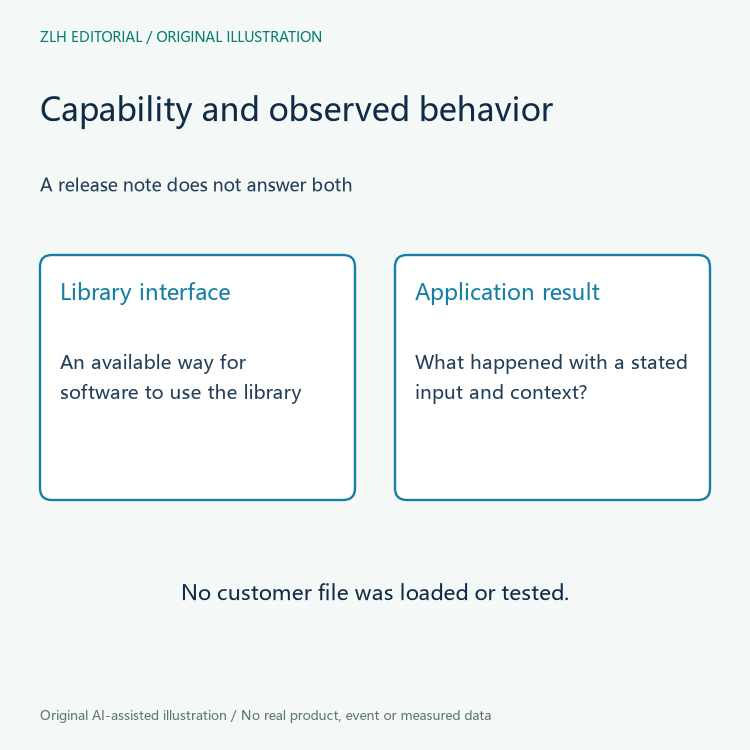
They do not establish which library version a particular support application includes, which features that application exposes, or what happened when it processed a real file. A short software news item should retain that distinction rather than imply a completed support test.
A language binding connects layers of software
Imagine a fictional support-tool developer explaining that a web-based component can call a library through an appropriate binding. The reader should understand that the binding concerns a software interface. It is not a new file-format definition and it is not the customer’s actual document.
The explanation can name the layers without overwhelming an ordinary user. A useful description might distinguish the support application, the interface it uses, and the library capability behind that interface. It should avoid treating all three as interchangeable names for one verified behavior.
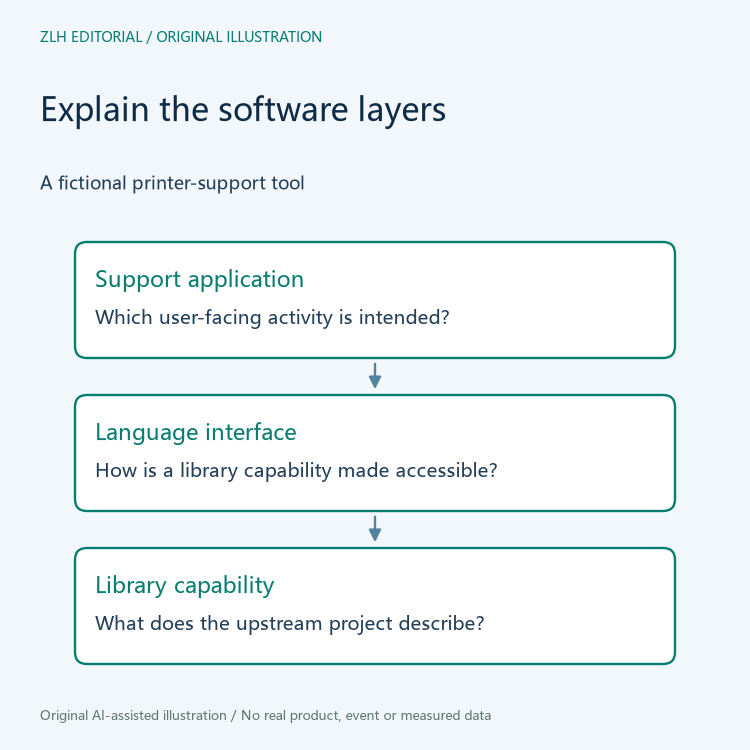
This fictional example contains no code, package identity, or actual implementation. It only illustrates why a library headline cannot fill in a support application’s composition. The responsible developer would need to explain the actual arrangement if a real service relies on it.
Application behavior still needs an appropriate observation
Suppose a support team wants to know whether its tool read a particular file as intended. That question concerns the supplied input, the application, and the observed result. A list of upstream features can provide background but cannot replace that observation.
A clear report should therefore say what was actually checked. If the team has only read release material, it should not claim that a customer file opened successfully. If it later performs a real check, the record should identify the relevant input and context rather than borrow an assumed result from the release notes.
The same applies to failure. A problem seen in an application should not be attributed to the library solely because the application uses it. The responsible team needs evidence about where the behavior arose. This article reports no real error and offers no diagnosis of an existing support system.
Do not turn a binding name into universal file support
A library’s available interface and an application’s supported content are separate questions. A binding can make capabilities accessible while the application chooses to expose only some of them. The application’s own explanation should identify the relevant scope.
For the fictional tool, a useful provider response could state which function the user-facing workflow intends to offer and which limits remain. It should not promise support for every possible file merely because the library provides a broader set of capabilities. Such a promise would need evidence beyond the binding announcement.
Keep a support note tied to the user’s question
A user asking about a file-handling issue needs a clear account of what the support team knows and what it will investigate. Naming a library can be helpful background, but it should not displace the original question. The note should explain how the software information relates to the reported activity.
An internal handoff can preserve the application description, the upstream source reference, and any actual observations as separate items. This is a proposed documentation arrangement for the example, not a procedure mandated by lib3mf. It leaves space for uncertainty rather than manufacturing a complete technical explanation.
The release news is valuable because it identifies new interface options for software authors. Its value does not depend on pretending that every downstream support application has already adopted them. A careful summary can introduce the option and still leave the actual implementation question open.
That open question belongs beside the application description, where the support reader can find it readily.
More topics appear in our 3D-printer service-record section, with further reading in the article directory. Both original illustrations are conceptual. They contain no customer file, real software composition, support result, or claim that a printer is ready to operate.


