

Printer Support Archive Acceptance: Explain the ZIP Check
2026-11-02
Printer Support Archive Acceptance: Explain the ZIP Check
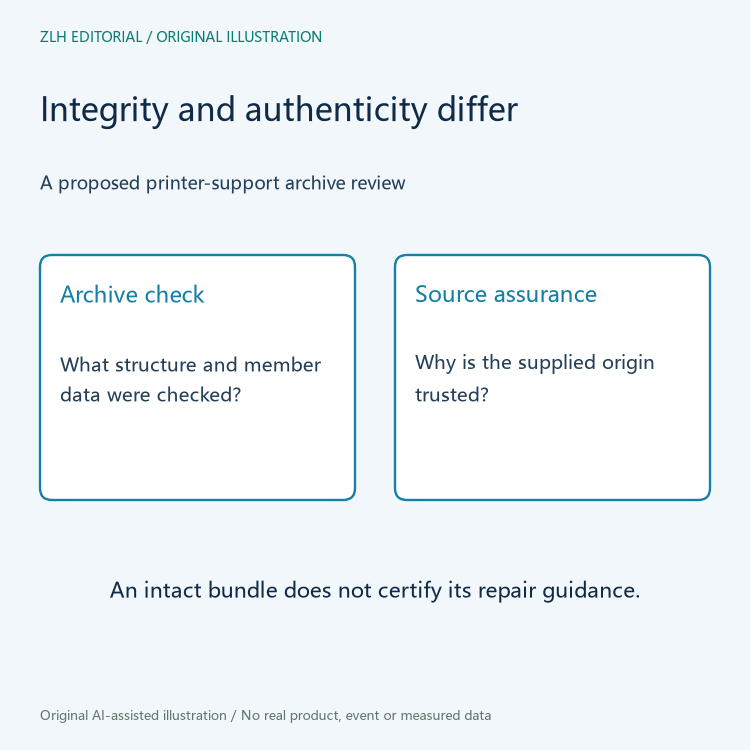
A ZIP check on a printer-support archive can answer a useful technical question without establishing that the material came from the expected author. Before accepting a service-document bundle, a receiving team should ask what was checked and which conclusion the result supports. This article proposes a review of a fictional archive handover. It opens no archive, extracts no files, and reports no real checksum or support outcome.
Identify the archive and the promised delivery
Ask the supplier which bundle is the acceptance object and what it is expected to contain. An archive filename can help locate a delivery, but it is not a complete account of the included documents or their intended roles. The receiving note should identify the actual supplied object.
The support team should also distinguish a document bundle from a software installation package. The present checklist concerns explanations and evidence about a proposed delivery. It gives no instruction to run, install, or extract an unexamined archive on a production system. The agreed receiving task should remain attached to the bundle so that later reviewers understand the boundary of the proposed examination.
Prepare a place for the supplier to state the check performed. A generic intact label is not enough. Ask whether the record concerns archive structure, member data, a comparison against another identified object, or a different task. That makes the intended conclusion reviewable before the receiver relies on it.
Read the scope of the ZIP integrity operation
The Python zipfile reference describes testzip as reading the files in the archive and checking their CRCs and file headers. It returns the name of the first bad file or None. Those documented operations define a particular technical scope.
If a supplier reports that check, ask for the actual input and observed result in the authorized review record. The buyer should not expand it into a claim that every included instruction is correct or appropriate for the printer. Structural and member-data checks are different from technical-content approval.
The current article runs no operation. Documentation of the function is not evidence that a supplier used it or that a real archive passed. A later result must be attached to the actual bundle and environment rather than copied from an illustrative example.
Keep a comparison digest tied to its reference object
The NIST hash-function glossary describes fixed-length outputs from input data, with definitions depending on the identified source context. For a delivery comparison, a reported digest needs the actual algorithm and the object against which it is compared. A bare string is not an explanation.
Ask who supplied the reference and which exact representation it describes. A digest for the archive and a digest for one member concern different objects. The acceptance record should not let a successful comparison of one silently become a claim about every other representation.
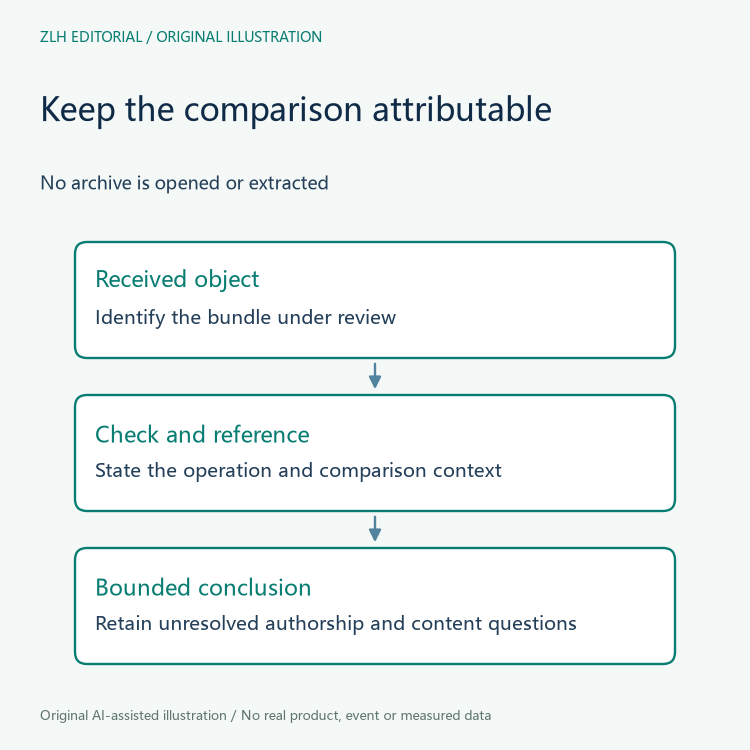
No digest is calculated here. Even an actual matching comparison would need a separate account of why the reference is trusted. File comparison alone should not be presented as proof of the author’s identity, permission to use the material, or correctness of repair guidance.
Preserve failures without inventing their cause
If a later authorized check identifies a problem, record the actual operation and observation. Do not immediately conclude that the sender supplied malicious content or that the printer caused the problem. The receiving team needs evidence before assigning a cause.
Keep the received bundle distinct from a replacement or corrected delivery. If the supplier sends another archive, identify which questions it addresses and which checks need repeating. Overwriting the original and retaining only a reassuring final label can lose the relationship the reviewer needs.
The same principle applies when the bundle contains outdated or unclear guidance. An archive integrity result does not settle document revision or applicability. The service owner must review those content questions with the appropriate source and printer context.
Close the archive task without overstating acceptance
A useful handover distinguishes the received archive, the integrity operation, the comparison reference where applicable, and the remaining authorship or content questions. It should name what was observed and what was merely proposed. Another reviewer can then understand the scope of the acceptance statement.
Ask who maintains the bundle inventory and who can answer a question about a particular member. Those responsibilities support later follow-up without turning a technical check into a general guarantee about the supplier. Keep document approval and delivery mechanics attributable.
Related methods appear in our printer support section and the article directory. Both original illustrations contain no real archive contents, checksum values, corrupted files, repair procedures, or completed service tests.


